
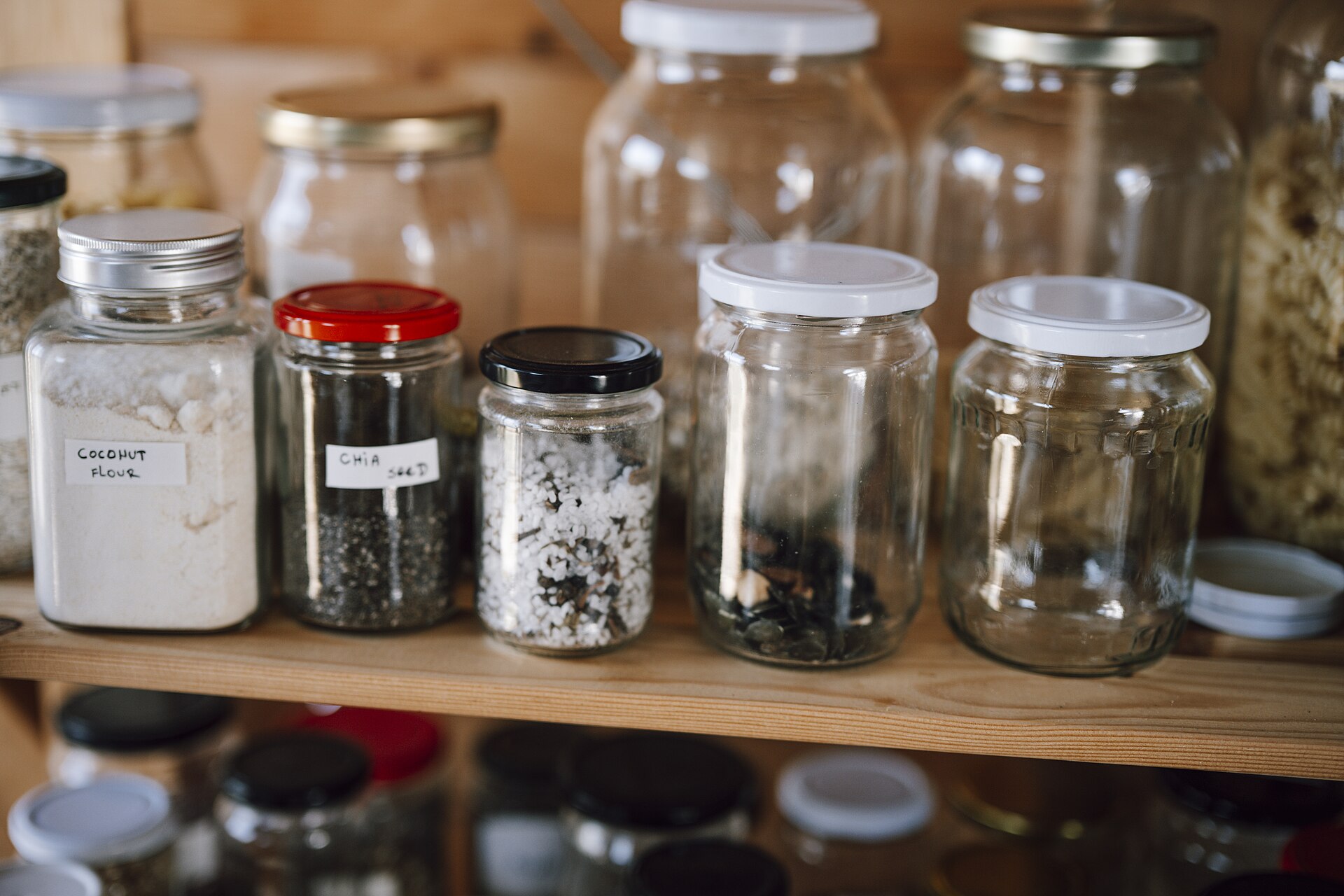
An emergency pantry works best when it is part of ordinary household cooking. Food moves through it, damaged packages are noticed, and the person making dinner can find the older stock. A shelf full of cans with a distant date is less useful if nobody knows which ones require refrigeration or how much water their preparation needs. The practical task is to turn labels into a small, repeatable inventory routine.
Start with the storage instruction
Read the words about storage before interpreting the date. A metal can does not automatically make its contents shelf stable. Some canned products are sold with a requirement to keep them refrigerated. Similarly, a carton that can sit unopened in a cupboard may need refrigeration once opened. Packaging material and storage category answer different questions.
The USDA explanation of what shelf stable means identifies products that can safely remain at room temperature before opening and notes exceptions among canned foods. For an outage cupboard, choose items whose instructions match the conditions you can actually provide. Keep foods requiring refrigeration in a separate inventory rather than quietly counting them as ready supplies.
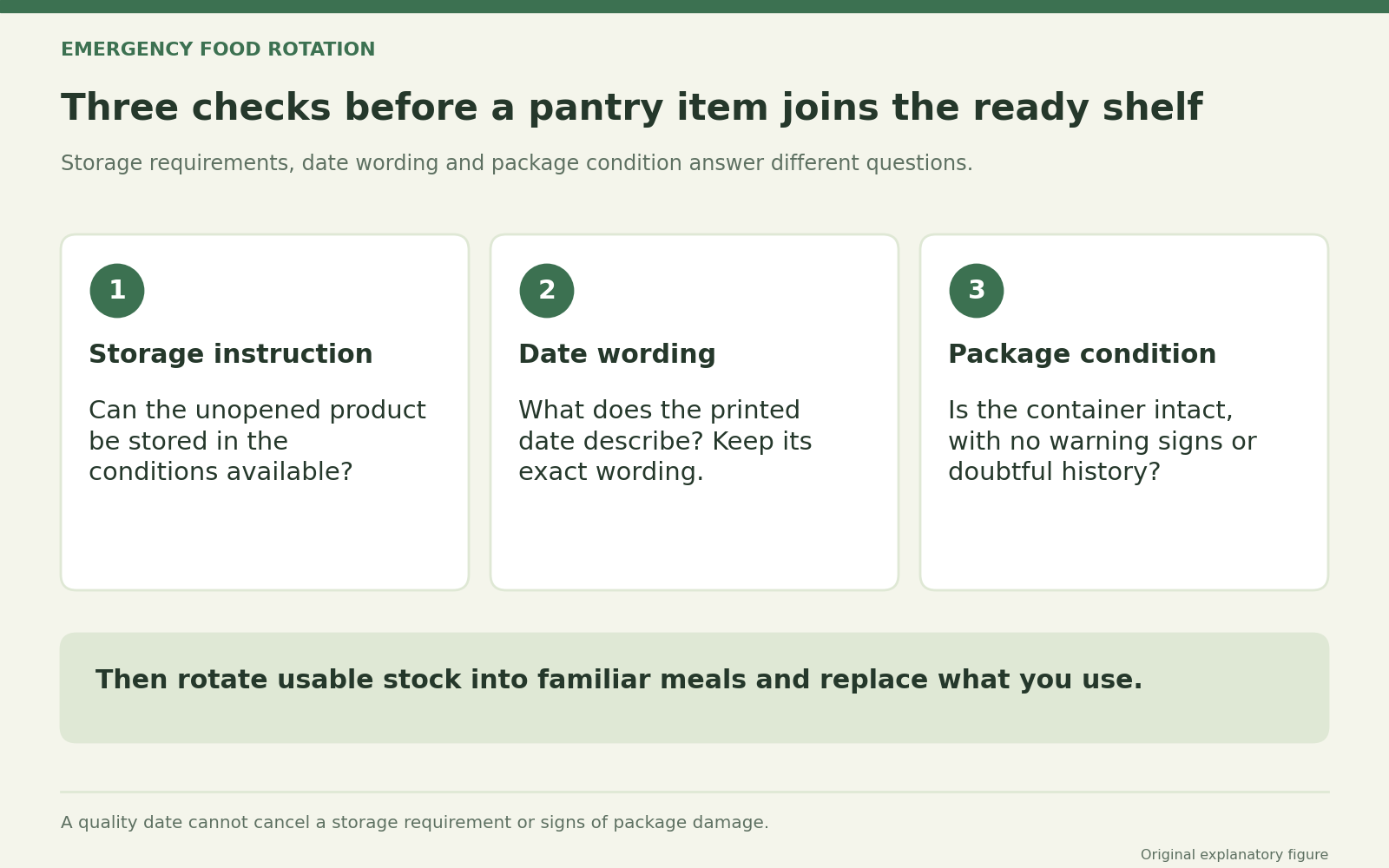
Read the package in three separate passes
First, find the storage instruction. Second, find the date and the words beside it. Third, inspect the package itself. Those checks should remain separate on a written list. A date can help you arrange stock, but it cannot tell you whether a seam was damaged yesterday. An undamaged container cannot tell you whether it was stored correctly during a hot summer.
Record the date exactly as printed, including its wording. Do not turn every mark into an invented expiry date. A production code may identify a manufacturing batch rather than provide a consumer instruction. If a code is unclear, ask the manufacturer or leave the interpretation unresolved. Guessing a month and year creates false precision in an otherwise useful record.
Use a quality date to organize ordinary meals
Many date phrases used on American shelf-stable foods concern quality rather than a universal safety deadline. Their meaning also depends on product type and local rules. Infant formula is a distinct case and should not be treated like a tin of beans. This article concerns ordinary commercially packaged pantry foods, not instructions for infant feeding or home canning.
A sensible rotation plan puts the products you intend to use sooner at the front. When shopping, add replacements behind matching older items. If a newer purchase has an earlier printed quality date, arrange by the useful date rather than by purchase order alone. The goal is an understandable shelf, not a system so elaborate that the household stops maintaining it.
Make package condition an independent decision
USDA guidance on keeping canned goods identifies leaking, bulging and badly dented containers among warning signs. It also emphasizes cool, dry storage. Do not taste food from a suspect container to decide whether it is safe. A reassuring date cannot cancel visible damage or a questionable storage history.
Create a separate space for an item that needs to be checked or discarded, away from the ready-to-use stock. Otherwise it may return to the shelf during a hurried tidy-up. If one leaking package has soiled its neighbours, inspect the surrounding area and clean it appropriately. Treat the shelf as a working food-storage space rather than a collection that is never disturbed.
Build a list around usable meals
For each item, record quantity, package size, storage instruction, date wording, and one ordinary meal that uses it. Add practical requirements such as a can opener, heating, or clean water. Ten portions of dry pasta and ten portions of ready-to-eat beans impose different demands during an interruption, even if the calorie totals look similar on paper.
| Inventory field | Example of what to record |
|---|---|
| Identity | Food name and package size |
| Storage | Unopened cupboard storage; refrigerate after opening |
| Date | The exact printed phrase and date |
| Use | A familiar meal plus water or equipment needed |
| Condition | Checked, intact, with any concern recorded separately |
This also reveals gaps without requiring a perfect spreadsheet. A stockpile might contain many ingredients but few combinations anyone normally eats. Start by making one meal from the cupboard, then replace what was used. That small rehearsal checks portions, preparation effort and acceptability at the same time.
Give opened food its own rule
Opening changes the storage situation. Write the opening date on a container when that helps you follow its instructions, and avoid returning opened packages to a shelf intended for unopened emergency supplies. If reliable refrigeration is unavailable, package size becomes an important planning choice. A smaller container that the household finishes may be easier to use than a large one that creates leftovers.
Keep preparation instructions with foods transferred into secondary storage. A beautifully organized tub is less useful if its original label, allergen information and lot identification have disappeared. Labelled outer boxes can help group products, but preserve the information needed to identify each food and respond to a recall.
Leave enough space to see the labels without unloading the whole cupboard. A shallow row, a simple tray or a list attached to the door may work better than packing every gap. If supplies are split between locations, record that too. Otherwise a household may buy duplicates while overlooking food in another room. Organization earns its place when it reduces that everyday confusion.
Choose a review routine you will remember
Check the cupboard when making the shopping list, not only when severe weather is forecast. Look for moisture, pests, damaged containers and items repeatedly passed over. Move the next few products into the normal cooking area and replace them after use. A brief review linked to an existing habit is more dependable than an ambitious annual audit nobody schedules.
The finished system should let another household member understand what is available without asking its designer. Clear storage categories, readable labels and familiar meals make the pantry usable. Those habits also connect preparedness with everyday health: preventing contamination and preserving food information matter long before any emergency begins.